
My children are sad to be done with your Introductory Science course. So am I! It made science so easy this year!
Mrs. L.
It is absolutely no wonder to me that you received this award. I have found your high school biology amazing.
Sami W. and Children
Just wanted to drop a quick note and say how much we are enjoying the Life Science curriculum. Hands down, it is the best program out there.
Ellen K.

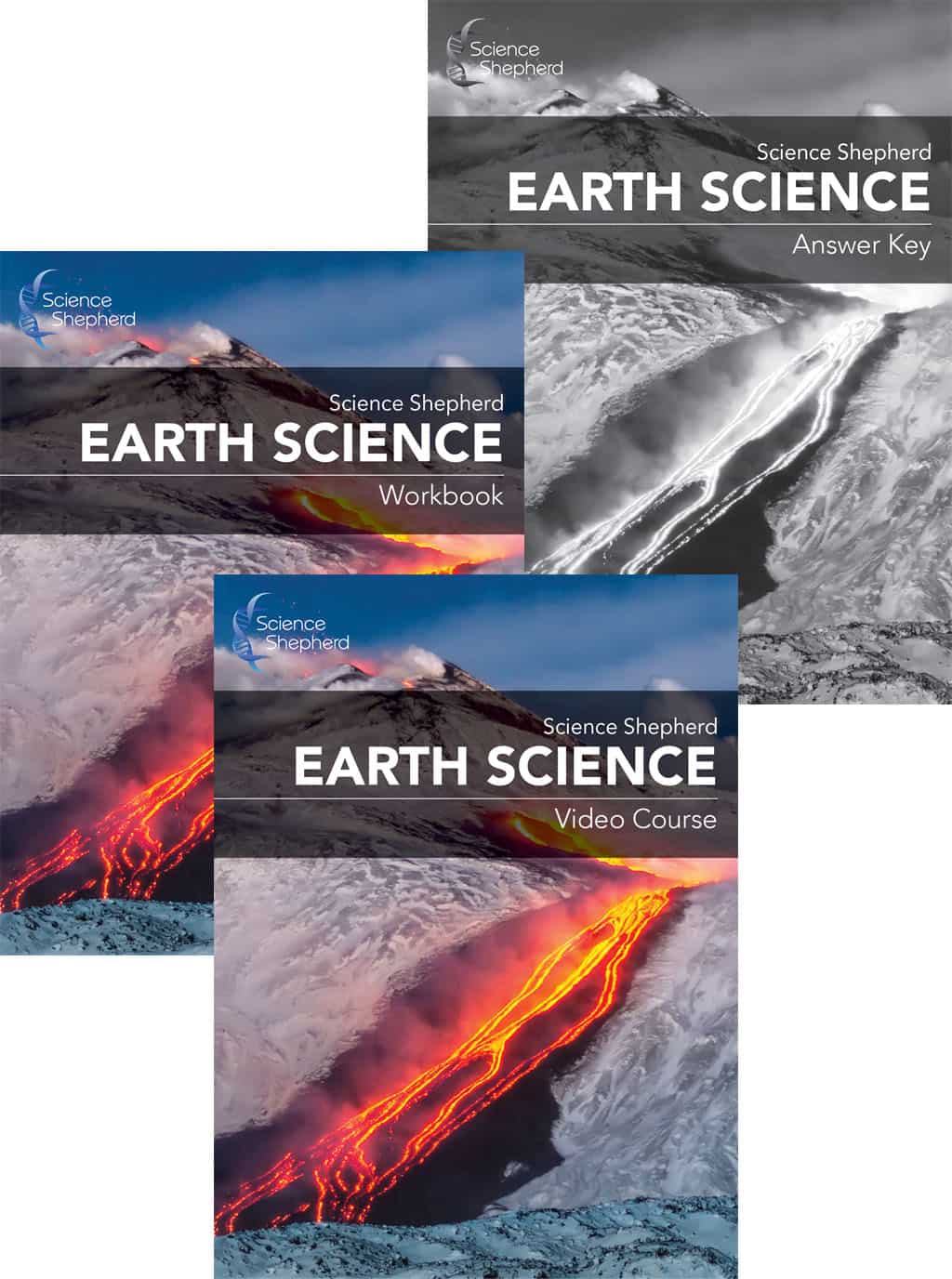
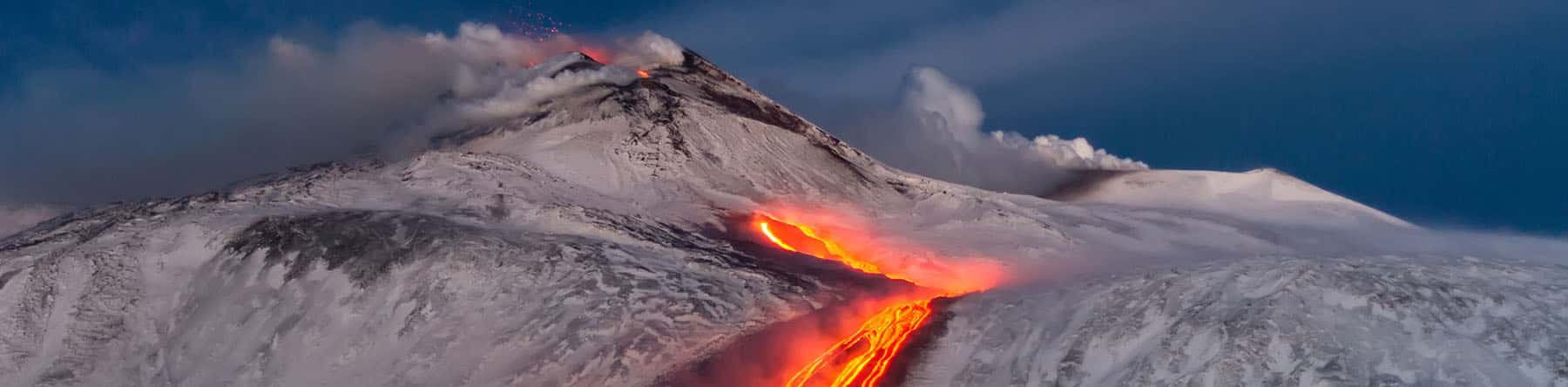
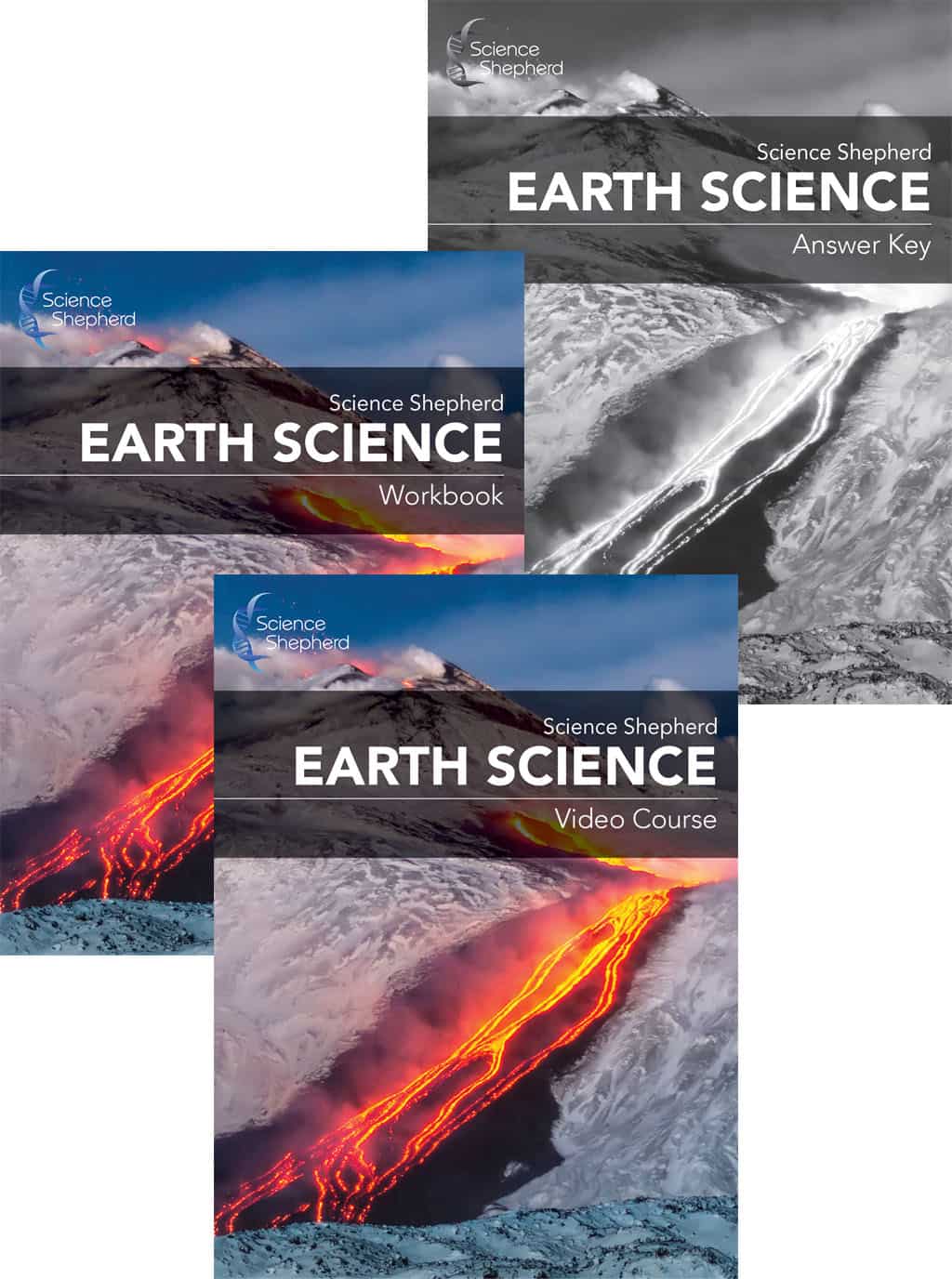
Science Shepherd's homeschool Earth Science curriculum for elementary and early-middle school grades is a video-based (streaming or DVD) program with integrated workbooks, similar to our best-selling Introductory Science. Taught by homeschool dad Dr. Scott Hardin, Earth Science introduces students to the biblical and secular worldviews and how those beliefs impact the study of science before studying various aspects of earth science, including the structure of the earth, glaciers, volcanology, oceanography, and more. Along the way, Dr. Hardin highlights how scientific observations support the creation account in Genesis.
The Earth Science Video Course is presented in two tracks - Level A or B - to better tailor the learning experience to each student. Level A includes 121 lessons and Level B features 161 lessons (all lessons from Level A, plus more) for a more in-depth course. Level B presents students with more detailed discussions in select topics such as minerals, glacial features, lava, ocean salinity and more. Each Level is presented in an easy-to-follow 35-week schedule with 4.5 minute videos (average) that is great for independent study.
During or after each Earth Science video lesson, students complete workbook assignments to help reinforce key concepts. In addition to including content for the extra Level B video lessons, Earth Science Workbook Level B is also written to be slightly more challenging than Earth Science Workbook Level A. Optional hands-on activities are included in both workbook Levels.
These recommendations are flexible and meant only as guidelines. When selecting the right Level for your student(s), consider their reading level and critical thinking. The free course preview and Workbook samples can also help you choose the appropriate Level (see below).
Enrolling multiple students? If you will need Level A and Level B material, simply purchase an Earth Science Level B curriculum bundle and add additional Level A Workbooks and an Answer Key as needed.
Science Shepherd was awarded the 2023 and 2024 Practical Homeschooling Elementary Science Reader Award, is a 2022-2025 Homeschool.com Educational Website Awards Winner, and receives rave reviews from families. You can be confident that our homeschool Earth Science curriculum will provide an excellent educational experience to your student.


Watch a sample lesson video below, or access a free preview of our homeschool Earth Science curriculum through our online student learning portal. The preview includes 3 complete lesson videos and the corresponding pages for Workbook Level A and Level B so you can easily compare and select the right Level for your student.
Ready for new discoveries? Save 10% with the Earth Science curriculum bundle!
When people hear the term Earth science, they naturally tend to picture the solid rock part of the planet we live on, as well as the huge bodies of water that cover about seventy percent of the Earth's surface. But when you get into Earth science, you realize how much there is to scientifically studying the Earth. As we discussed earlier, there are many different sciences that are part of the study of Earth science. Oceanography studies the oceans. Freshwater science looks at lakes and rivers. Paleontology studies past life forms. Meteorology studies the weather and other sciences that we'll study in our class. But today, we'll start our earth science discussion with geology, the study of what the earth is made of, what the earth looks like, and how the earth changes appearance over time. When it comes to studying what the earth is made of, that really means studying both the liquid rock and the solid rock that make up the earth. Now, I just said liquid rock, and most of us are familiar with solid rock that makes up the earth because we walk and drive on it and live on it every day. But there's also liquid rock underneath the earth's surface. We'll talk about this more in an upcoming class. But when we look at how the earth is built from the surface all the way down to its center, there are four main layers. As you can see from the labels, three of the layers are solid and one is liquid. That liquid rock layer is pretty deep down below the surface of the earth. So one aspect of geology is studying these layers of the earth and how they work. Another part of geology is studying the actual rock, studying the types of minerals that make up the rocks of the earth, and learning about the three major types of rock that the earth is made from. We'll get familiar with different landforms like mountains, valleys and plains, as well as general types of bodies of water like oceans, lakes and rivers. Understanding that the surface of the earth's appearance is constantly changing because of geological processes like weathering and erosion is another important aspect of geology, and we'll talk about those processes in our class. We can see a small example of how much the appearance of the earth can change in a short time with this picture of the Providence Canyon Outdoor Recreation Area in Georgia. Prior to about eighteen twenty five, this area was fairly flat and uniform, but likely had small depressions called gullies and maybe a slightly larger depression called a valley here and there. However, poor farming practices led to a lot of water runoff from farmers fields into and through this area, which over about fifty to sixty years in the 1800s eroded a lot of the soil and rock in this one thousand three acre area. That's about one and a half square miles so that there are many deeper gorges that are now up to about a hundred and fifty feet deep. This is just a small example of how quickly geological forces can change the earth's appearance. These easily visible changes of how the earth looks today instruct us that the earth of today doesn't look exactly like it did in the past. And whether a creationist or a naturalist, geologists or the scientists who study geology spend a lot of time trying to piece together how the earth's appearance has changed over time. Glaciers are another force that changed the way the earth looks, and we'll study them too. Now, before I end this brief introduction of where we're going in in the geology portion of our class, I want to orient you to the earth. And by that, I mean, let's review the basics about how the earth looks, because I'll be referring to this a lot throughout the course. The earth is a globe, a gigantic sphere like a ball, but it's huge about twenty five thousand miles all the way around, and there are seven major landmasses on it that are called continents. Australia, Asia, Europe, Africa, North America, South America, and Antarctica. Our study of geology will take us all over the Earth to all of the continents. And last for today is a brief mention of the location system that has been used for more than two thousand years, latitude and longitude. Those are the lines that maybe you have seen on the globe but didn't know exactly what they were. So north is here, south here, east is here, and west here. Latitude lines are the ones that go across the globe from east to west and look like the runs of a ladder. Latitude, ladder. Longitude are the lines that go from north to south. I don't have any cuter way to remember longitude. I just remember that the lines that don't look like the rungs of a ladder are longitude lines. The lines are numbered but I won't get into that too much now, but I do want you to know that the two lines where the numbering starts are the equator for latitude and the prime meridian for longitude. We'll learn a lot more about latitude and longitude later in the course, but that will do it for today.
Level A of Earth Science includes 121 video lessons. Level B contains those same lessons, plus 40 additional lessons. So, Level B is a longer course than Level A. These additional lessons provide more advanced study in the areas of worldview, layers of the earth, lava, oceanography and more. In addition, the Level B Workbook is more challenging than the Level A Workbook.
No, Earth Science does not have any tests or quizzes. If you would like a cumulative review of material for your student(s), we recommend using the crossword puzzles in the workbooks, which review material from several recent classes.
Since these are science courses that were written by a Christian, probably the most common question I am asked is, “What about evolution and creation?” The answer really starts and ends with the Bible. It is the unerring Word of God and, as such, provides the framework upon which everything is understandable, including science. As such, all Science Shepherd material is presented from a literal understanding of Genesis, teaching that God created the universe and everything in it in 6 literal, 24-hour days, about 6,000 years ago. Now, why evolution in Christian-based courses? It is important to cover evolution and some basic principles because our children will be constantly bombarded with it throughout their lives.
Looking to plan a few years in advance and have your next topic selected? We recommend our Physical Science homeschool curriculum as a follow-up to Earth Science. You can also read our "Recommended Course Progression" blog post for a broad overview of utilizing Science Shepherd curriculum in your homeschool.
December 29, 2025 5 min read
Science for 7th grade.
December 20, 2025 5 min read
Homeschool science for 6th grade.
Subscribe to our newsletter and we'll send you a code for 10% off an order
plus a free download of 5 Scientific Ways Your Kids Can Defend Their Faith.